Prepare your home for a newly adopted pet by thinking about safety, comfort, and routine before the pet walks through the door. Many people focus heavily on adoption day emotions, but the home environment often shapes how smooth the adjustment becomes. A calm setup helps the pet settle faster and helps the owner feel more in control. The Step-by-Step Pet Adoption Toolkit offers practical guidance for turning a house into a more supportive first home.
A newly adopted pet usually benefits from one clear, quiet base area. This space can hold food, water, bedding, and a few essential items while giving the pet a place to decompress. Instead of full access to the entire home immediately, a base area provides structure and lowers stress. It gives the animal a predictable zone and allows owners to observe adjustment more calmly.
Pet-proofing does not have to be complicated, but it should be deliberate. Secure loose cords, remove toxic plants, check gates and doors, store cleaning products safely, and move breakable objects out of reach. Small home hazards can become big early problems when a pet is nervous or curious. Taking time to scan each room before adoption day can prevent avoidable accidents and reduce owner anxiety.
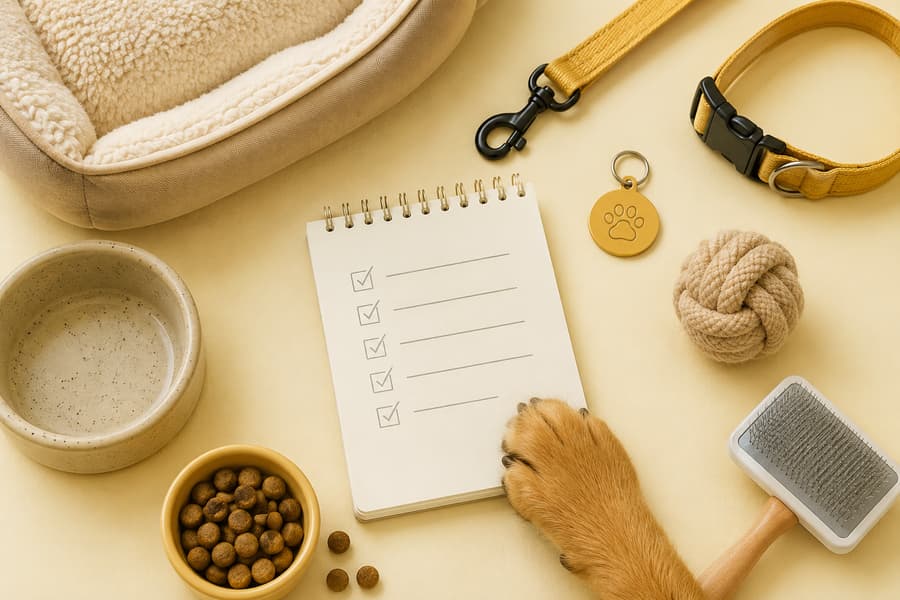
Supplies should be ready and easy to find. Bowls, food, litter or waste bags, crate or carrier, bedding, leash, toys, and grooming basics should not be scattered around the home. An organized setup makes the first days much easier. Owners are often tired or emotional after adoption day, so simple access to supplies matters more than many expect.
Homes with children or existing pets need an even more thoughtful plan. Introductions should be calm, gradual, and supervised. Family members should understand that the adopted pet may need quiet time rather than constant attention. The Step-by-Step Pet Adoption Toolkit helps owners think through these interaction details so everyone starts on steadier ground.
Home setup works best when it supports routine. Feeding times, rest areas, bathroom breaks, and play zones should feel clear and repeatable. Pets often settle faster when daily patterns make sense. A thoughtfully prepared home is not only safer. It is also easier for the new pet to understand, which supports confidence and calmer behavior during the adjustment stage.
A prepared home can make adoption day feel far less chaotic and far more welcoming. Safe spaces, organized supplies, and a realistic introduction plan all help. For an overall readiness structure, read the Pet Adoption Checklist article. For choosing a compatible pet, continue with the Choose the Right Pet article. The Step-by-Step Pet Adoption Toolkit helps new owners create a smoother and kinder beginning.




Leave a comment